Blog
Do you need a sign permit in Mississauga, Brampton or Toronto?
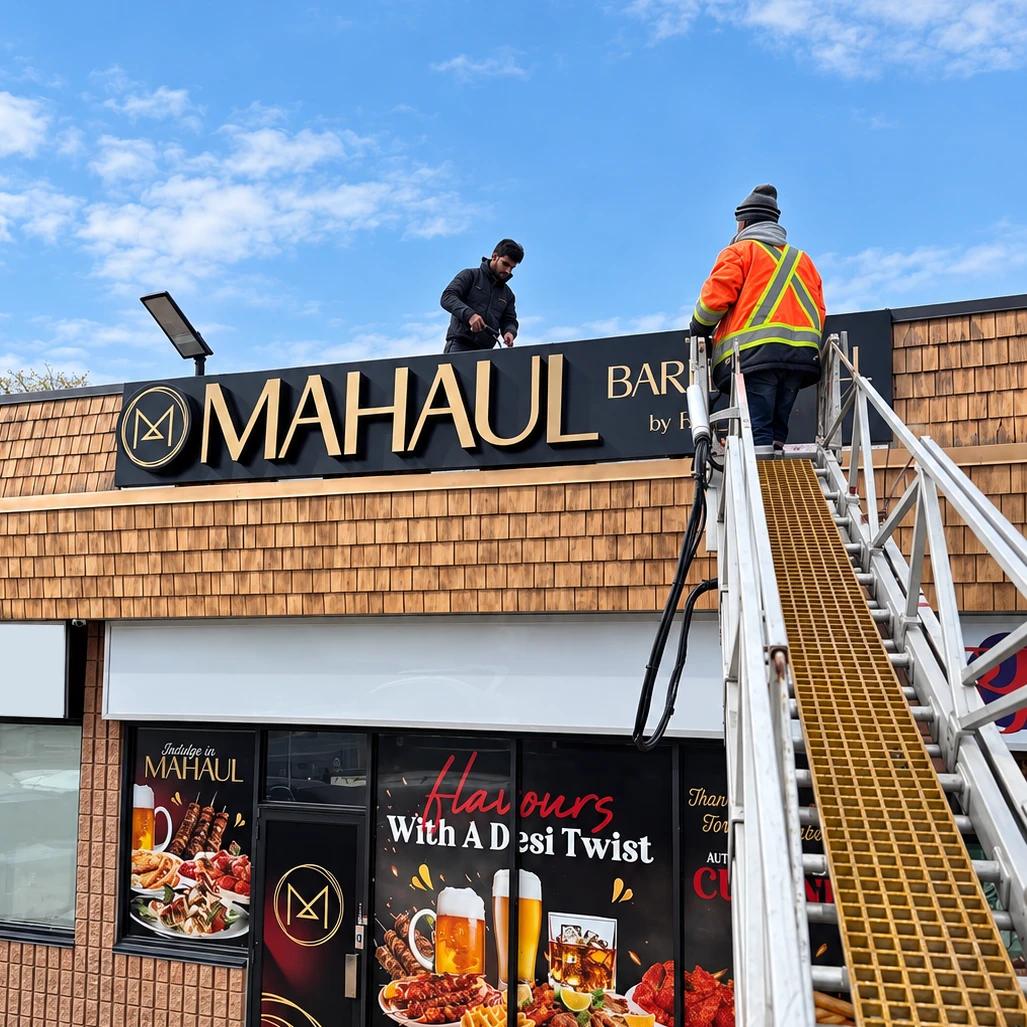
Short answer: for most permanent exterior signs, yes. A new storefront sign, a set of channel letters or a ground sign in front of your building will usually need a sign permit from the city before it goes up. Mississauga, Brampton and Toronto each have their own sign by-law, so the rules, forms and approval steps are different in each city.
Here’s a plain-language guide to how it works, what you’ll need, and what happens if your sign doesn’t fit the rules.
Why cities require sign permits
A sign permit lets the city check that a sign is the right size for the building, in an allowed location, safely built and installed, and not a hazard to drivers or pedestrians. Each city’s sign by-law sets limits such as how large a sign can be compared to your storefront, how far it can project from the wall, how high it can sit, and whether it can be illuminated or animated.
Putting up a sign that needs a permit without one can lead to an order to remove it, so it’s worth getting right before anything is made.
Mississauga
Signs in Mississauga are regulated by the city’s Sign By-law 0054-2002, which has been amended many times since it was passed. It covers applying for a sign permit, the different types of signs, and enforcement.
Permit applications are handled by the City’s Planning and Building Department (Sign Unit). The application covers sign types such as fascia (wall) signs, ground signs and portable signs, and asks for details of the property owner, the applicant and the sign contractor.
If a sign doesn’t meet the by-law, Mississauga has a sign variance process, and variances are decided by City Council. The City strongly recommends designing your sign to comply with the by-law wherever possible. Variances are meant for genuine site conditions, not simply for wanting a bigger or more visible sign.
Brampton
Brampton’s rules are set out in its Sign By-law 399-2002, also amended many times. The by-law defines the different types of signs, sets permit requirements, and lists some small signs that are exempt from needing a permit.
Two things are worth knowing in Brampton:
- Portable signs (the movable signs you see in front of plazas) need a permit and can only be displayed for a set period from the date the permit is issued.
- Some properties have their own sign rules. Over the years, many amendments have added site-specific sign provisions for individual properties, so the rules for one plaza can differ from the plaza down the road.
Toronto
In Toronto, signs are governed by Chapter 694, Signs, General of the Toronto Municipal Code. It sets out when a permit is needed, which signs are exempt, and how variances work.
Toronto separates signs into two kinds:
- First-party signs identify a business on the same property, like your storefront sign.
- Third-party signs advertise something not related to the property, like a billboard.
If a first-party sign doesn’t meet the by-law, a variance application is decided by the Chief Building Official, and the decision can be appealed to the Sign Variance Committee. Variances for third-party signs go to the Sign Variance Committee directly. Applications are judged against criteria set out in the by-law.
What you’ll usually need for a permit
Requirements vary by city and by sign, but most sign permit applications ask for:
- The property address and the owner’s details, plus authorization if you’re a tenant
- Drawings of the sign showing its size, materials and how it’s built
- A drawing of where it goes on the building or property, with measurements
- Installation and structural details, especially for ground and pylon signs
- Electrical details for illuminated signs
If you’re in a plaza, also check your lease. Many landlords have their own sign criteria and need to approve your sign before the city will see it.
For lit signs, remember that in Ontario electrical work falls under the Electrical Safety Authority (ESA). Illuminated signs should be certified electrical products and connected properly.
Signs that often don’t need a permit
Every by-law lists some exemptions, which can include small signs, certain window signs and some temporary signs. The details differ by city and change over time, so don’t assume a sign is exempt. Check the current by-law, or ask your sign company to confirm.
Tips to avoid delays
- Design to the by-law first. A sign that complies from the start is much faster to approve than one that needs a variance.
- Measure your storefront. The allowed sign size is often tied to the width of your unit.
- Get landlord approval early if you’re in a plaza or multi-unit building.
- Don’t order or install until the permit is approved.
- Keep a copy of the approved permit in case anyone asks.
How Madix helps
We design, build and install signs across the GTA, and we handle the permit side for you. We visit the site, take measurements and photos, check the local sign by-law, prepare the drawings and submit the sign permit application to the city, whether it’s Mississauga, Brampton, Toronto or another GTA municipality.
This article is general information, not legal advice. Sign by-laws change, so always confirm the current requirements with your city or with us before your sign is made.